
Cart
0
Favour snacks built from fermentable fibre and prebiotic plant foods, oats, pulses, fruit, seeds, and nuts, paired with protein or unsaturated fat. This combination steadies energy and gives gut microbes substrates to work with. Fermented options such as live yoghurt or kefir can help occasionally, though sugar content and salt levels vary widely. Anyone with IBS should introduce new fibres gradually and watch their own tolerance rather than following a fixed rule.
TL;DR:
Consuming fermentable fiber paired with protein or unsaturated fat extends satiety and supports gut health more effectively than fiber alone.
Snacks such as nuts with fruit, oats with seeds, pulses, fermented dairy, and toppings like avocado provide a varied, microbiome-friendly rotation.
Sensitive individuals should introduce pulses, onions, and high-fructose fruits gradually, monitoring tolerance over several weeks to avoid bloating.
Reading labels for fiber content, added sugars, salt, and live cultures helps ensure snacks support gut diversity without counterproductive ingredients.
Simple, minimally processed options like overnight oats, roasted chickpeas, and kimchi-yogurt dips offer quick, portable, gut-friendly snacks.
Table of Contents
-
How to combine fibre with protein or healthy fats for better snacks
-
Shopping and label-reading: what to look for and what to avoid
Best gut-friendly snack ideas worth keeping in the cupboard
Different snacks feed different parts of the microbiome, so rotating categories works better than repeating the same one. Grouping by type makes it easier to build a varied rotation without much planning.
Fruit and nut combinations offer fibre alongside unsaturated fat. An apple with a tablespoon of almond butter, or a small handful of walnuts with berries, supplies pectin and polyphenols plus fats that slow digestion and support satiety.
Oat and seed-based snacks are easy to prepare ahead. Overnight oats with chia and berries combine soluble fibre with omega-3 fats, while a small bag of toasted oats and linseeds travels well for a desk snack.
Legume and pulse snacks are underused outside main meals. Roasted chickpeas, seasoned with paprika or cumin, deliver both fibre and protein in one snack. Edamame, lightly salted, works the same way and is easy to portion into small tubs.
Fermented options add live cultures when chosen carefully. Live natural yoghurt, kefir or a small serving of kimchi can support microbial diversity, though many shop-bought fermented products carry added sugar or salt that offsets the benefit.
Wholegrain or seeded crackers with toppings make a satisfying combination. Rye crackers with mashed avocado, or oatcakes with hummus, pair fermentable fibre with unsaturated fat in a format that needs no cooking.
Single-ingredient picks round out the list. Berries offer fibre and polyphenols in a small serving. Avocado brings fibre and monounsaturated fat. Walnuts and linseeds both contribute plant-based omega-3s, though linseeds are best started at around a teaspoon a day and increased slowly, with extra fluids, to avoid discomfort.
-
Fruit and nuts: apple with almond butter, or berries with walnuts, for fibre plus unsaturated fat.
-
Oats and seeds: overnight oats with chia, or toasted oats with linseeds, for soluble fibre and omega-3s.
-
Pulses: roasted chickpeas or edamame for fibre and plant protein together.
-
Fermented: live yoghurt or kefir in moderation, checked for added sugar.
-
Crackers with toppings: rye crackers with avocado, or oatcakes with hummus.
-
Single ingredients: berries, avocado or walnuts eaten on their own when time is short.
People with sensitive digestion should treat pulses, onions and high-fructose fruit with some caution, since these are common triggers for wind and bloating in IBS. Introducing them in small amounts rather than avoiding them altogether tends to work better over time.
How to combine fibre with protein or healthy fats for better snacks
The principle is simple: fibre alone digests quickly and can leave you hungry within the hour, whereas protein and unsaturated fat slow that process and extend satiety. Fermentable fibre also gives gut bacteria something to break down into short-chain fatty acids, compounds linked to gut barrier function and immune signalling. Pairing the two makes a snack more filling and more useful to the microbiome at the same time.
A handful of reliable templates cover most situations:
-
Greek yoghurt with berries and chia, for live cultures, fibre and omega-3 fat in one bowl.
-
Apple slices with nut butter, for pectin fibre alongside protein and unsaturated fat.
-
Hummus with vegetable sticks, for fibre from chickpeas and vegetables plus plant fat from tahini and olive oil.
-
Roasted chickpeas with a small handful of nuts, for a fully plant-based fibre and fat pairing.
-
Oatcakes with avocado, for soluble fibre plus monounsaturated fat.
-
Kefir with a spoon of oats, for live cultures combined with fermentable fibre.
For IBS, start with soluble fibres such as oats and cooked vegetables before introducing legumes or seeds, add new foods one at a time, and give each change three to four weeks before judging the result. Sugar alcohols, often found in “diet” or “low sugar” snack bars, are worth avoiding if wind or bloating is a recurring problem.
Pro Tip: Batch-portion two or three templates into small tubs on a Sunday, so a gut-friendly snack is grab-and-go on a busy weekday rather than a decision you have to make from scratch.

Quick recipes and no-cook ideas ready in ten minutes
These need minimal equipment and most keep well in the fridge for a few days.
-
Overnight oats: mix 40g oats, 150ml milk or a plant alternative, a spoon of chia and a handful of berries in a jar. Leave overnight. Keeps for two days in the fridge and travels in the same jar.
-
Roasted chickpeas: drain and dry a tin of chickpeas, toss with olive oil and a pinch of cumin, roast at 200°C for 20 minutes. Keeps for three days in an airtight container, though they soften over time.
-
Avocado and rye: mash half an avocado onto a slice of rye toast with a squeeze of lemon and a pinch of chilli flakes. Best eaten fresh, so this one is not a make-ahead option.
-
Kimchi and yoghurt dip: stir two tablespoons of chopped kimchi into a small pot of live natural yoghurt. Serve with vegetable sticks. Keeps for two days covered in the fridge.
-
Date and chia bites: blend eight pitted dates with two tablespoons of chia and a tablespoon of nut butter, roll into small balls. Keeps for a week in the fridge or a month in the freezer.
Overnight oats and the date bites both work well with a plant-based milk or nut butter for a fully vegan version, and rye toast can be swapped for a gluten-free seeded cracker if needed. For more seed-forward recipe ideas, Wild Foodz has practical seed-based meal suggestions worth exploring alongside these.
Shopping and label-reading: what to look for and what to avoid
A packaged snack is worth buying when the label shows real fibre content, not just a fibre claim on the front. Checking a handful of details takes seconds once it becomes habit.
-
Look for fibre per portion, ideally a few grams rather than a token amount.
-
Check sugar and salt, since many “healthy” snack bars carry as much of both as a standard biscuit.
-
Confirm live cultures and refrigeration for anything marketed as fermented or probiotic. Room-temperature “fermented” products do not guarantee live cultures at the point of sale.
-
Avoid sugar alcohols such as sorbitol or xylitol if you are prone to wind or bloating.
-
Watch for total and saturated fat, particularly in fried or heavily processed snacks.
A recommended adult fibre target is often cited as a moderate daily amount, yet many people do not reach this level, which makes snacks a practical place to close the gap. Highly processed snacks, even when marketed as “gut-friendly”, tend to strip out the fibre and polyphenols that whole foods retain, so the ingredient list matters more than the front-of-pack claim.
Ossa Organic’s perspective on gut-friendly eating
Ossa Organic is a business built on organic ingredients and slow cooking rather than shortcuts. That approach carries into snacking: simple ingredient lists, no preservatives, and food treated as something to nourish the body rather than just fill a gap. None of this replaces medical advice, but it shapes how we choose what goes into our own products. Readers wanting a structured starting point can follow our 14 Day Gut Reset for guided support.
— Ossa Organic
Shop Ossa Organic snacks that follow this same guidance
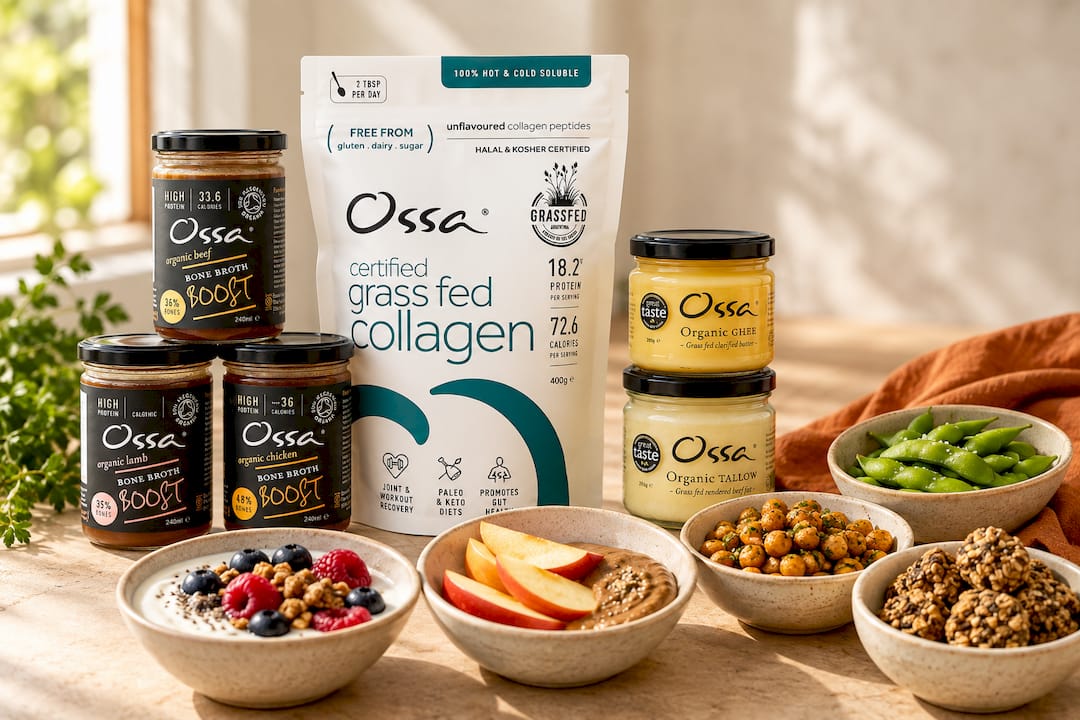
The principles above, simple ingredients, minimal processing, fats and fibre that do something useful, are the same ones behind our own snack range. Our Tallow Potato Crisps are cooked in grass-fed tallow rather than seed oil, keeping the ingredient list short and free from the additives found in most crisps. For a wider set of gut-focused staples in one order, the Ossa ‘Functional Nutrition’ Ambient Bundle groups several products together, useful if you would rather stock up once than buy items separately. Single packs suit trying a product first, while the bundle suits anyone ready to build it into a regular routine. Browse the full range in our shop for more options.

Selected sources and further reading
A systematic review on prebiotic and fermentable fibres, NHS Eatwell Guide practical pairing advice, a PMC review on microbiota-focused dietary approaches, Royal Berkshire NHS guidance on IBS tolerability, and Harvard Health’s anti-inflammatory food swaps informed the recommendations above.
FAQ
What is the best snack for your gut?
There is no single best snack, but a reliable pattern is fermentable fibre paired with protein or unsaturated fat, such as Greek yoghurt with berries and chia, or hummus with vegetable sticks. Rotating between oats, pulses, fruit, seeds and occasional fermented foods covers more ground than repeating one item.
What are the best foods for gut health?
Oats, wholegrains, pulses such as chickpeas and lentils, berries, apples, linseeds and walnuts are commonly recommended because they supply fibre, polyphenols and unsaturated fats that feed gut microbes. Fermented foods with live cultures, such as natural yoghurt or kefir, can add to this when eaten regularly and without excess sugar.
What is the 7 day gut reset?
Definitions vary, but a short gut reset typically means focusing for a week on wholegrains, pulses, fruit and vegetables while cutting back on processed snacks and added sugar. Ossa Organic offers a longer structured version, the 14 Day Gut Reset, for readers wanting a guided approach rather than a strict short-term plan.
Which foods support digestion most consistently?
Fibre-rich plant foods such as oats, beans, lentils, onions, garlic, bananas and apples are consistently linked to healthy digestion because gut bacteria ferment their fibre into short-chain fatty acids. Pairing these with a source of protein or unsaturated fat, rather than eating them alone, tends to support steadier digestion.
Can fermented snacks upset a sensitive stomach?
For some people with IBS, fermented foods and certain pulses can worsen wind or bloating, so it helps to introduce them slowly and monitor symptoms over three to four weeks. There is no universal safe amount, since tolerance depends on the individual and the specific fibre or ferment involved.