

Cart
0
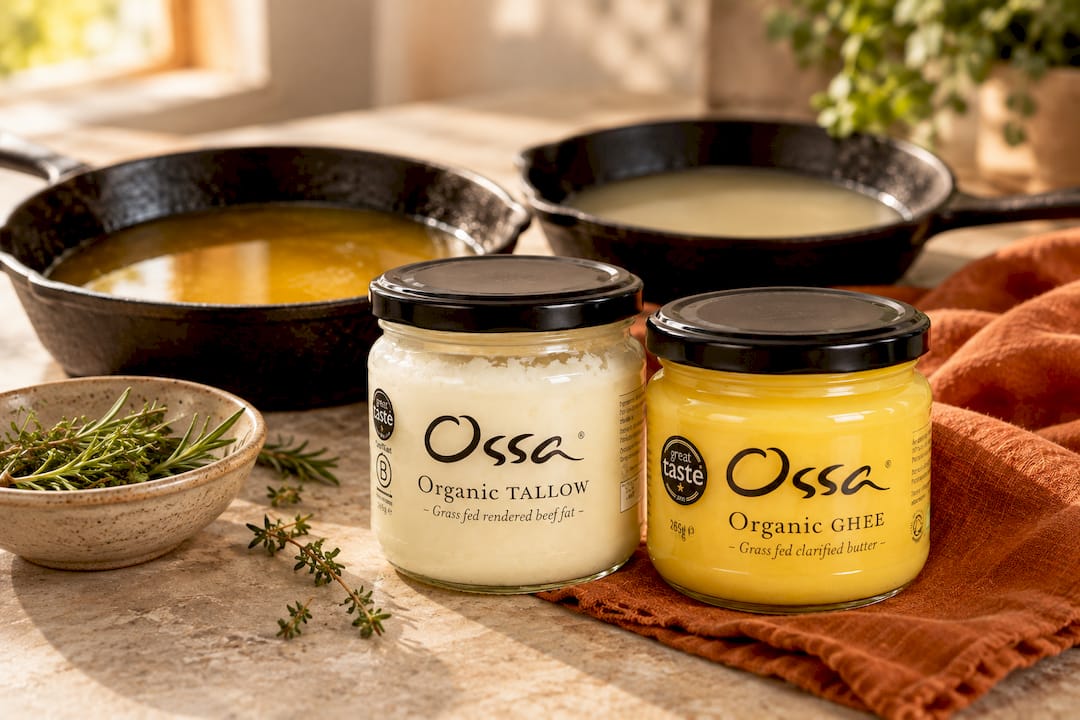
For very high heat searing and deep frying, choose beef tallow. For dairy tolerant cooks who want a nutty, butter like flavour and reliable shelf life, choose ghee. Both are saturated animal fats, so use either in moderation alongside the wider guidance on saturated fat intake, and treat them as flavour and technique tools rather than everyday cooking staples.
TL;DR:
Tallow is more suitable for high-heat searing and deep frying due to its higher stable saturated fat content and smoke point range.
Ghee offers a nutty flavor ideal for baking, sautéing, and finishing dishes, but has a slightly lower smoke point and may contain trace casein.
Both fats have a long shelf life when stored properly, but sourcing from grass-fed animals and checking for proper rendering or clarification can improve flavor and consistency.
A tablespoon of either fat accounts for a significant portion of the daily saturated fat limit, making portion control important for health-conscious cooking.
Using unsaturated vegetable oils like rapeseed or olive oil for everyday cooking helps balance saturated fat intake without sacrificing flavor or technique.
Table of Contents
Tallow vs ghee at a glance
Tallow is rendered beef fat, usually from suet or trim, melted down and strained until only pure fat remains. Ghee is clarified butter: butter that has been simmered until the water evaporates and the milk solids separate out, leaving behind a golden fat with a nutty aroma.
The two behave differently once they hit a hot pan.
-
Tallow: smoke point around 200°C to 250°C, savoury and neutral flavour, suited to searing, deep frying and roasting.
-
Ghee: smoke point around 190°C to 250°C, nutty and slightly caramelised flavour, suited to sautéing, baking and finishing dishes.
-
Shelf life: both outlast standard butter or vegetable oil once properly rendered or clarified, thanks to the removal of water and milk solids.
One practical note for anyone with a dairy sensitivity: ghee has had most of the milk solids removed, but trace casein can remain. Tallow contains no dairy at all, which makes it the safer default for strict dairy free cooking.
How each fat performs in real cooking
Smoke point numbers on a label are measured in a laboratory, not in your kitchen. Real world smoke points shift depending on how the fat was rendered or clarified, how clean it is, and how hot your pan actually gets, so treat the ranges below as guides rather than fixed rules.
-
Searing steak: heat tallow to shimmering, around 220°C to 230°C, for a hard crust with minimal smoking.
-
Shallow frying: both fats work well between 175°C and 190°C, ghee brings a nuttier finish to fried eggs or vegetables.
-
Deep frying: tallow holds up better over long frying sessions thanks to its higher proportion of stable saturated fat.
-
Roasting: ghee works well brushed onto vegetables or potatoes at 200°C, adding a caramelised edge.
-
Pastry: ghee’s firm texture at room temperature makes it a workable substitute for butter in shortcrust, though the flavour will be more pronounced.
Cast iron rewards fats with a savoury profile like tallow, since it holds heat evenly and helps build a proper crust; stainless steel works with either fat but demands closer attention to avoid hot spots. For more on how cookware choice interacts with fat performance, this cookware comparison is a useful read.
Pro Tip: Never judge readiness by smoke alone. A faint haze is normal, a thick grey smoke means the fat has already started breaking down and picked up bitter, burnt notes.

What the nutrition numbers actually mean
A tablespoon of either fat delivers roughly the same calories, and both are almost entirely saturated fat with small amounts of monounsaturated fat. The practical question is not which fat is “healthier” in isolation, but how either fits into your wider saturated fat intake for the day.
UK guidance recommends keeping saturated fat to no more than 10% of total daily energy, which works out to roughly under 20 grams to 22 grams for women and under 28 grams to 30 grams for men each day.

A tablespoon of tallow or ghee can use up a substantial part of that daily allowance in one go, which is worth knowing before you reach for a second spoonful.
Public health guidance is consistent on the direction of travel: swapping saturated fats for unsaturated vegetable oils such as rapeseed or olive oil tends to lower LDL cholesterol more effectively than simply cutting back on dietary cholesterol. Reviews of long-term studies point the same way, showing that replacing saturated fat with polyunsaturated fat is linked to lower cardiovascular disease risk, without any credible evidence that ordinary seed oils themselves cause harm.
None of this means tallow and ghee have no place in a health-conscious kitchen. It means treating them as flavour and technique choices rather than daily cooking oils.
-
Use tallow or ghee for the dishes where their flavour or heat stability genuinely matters, such as a seared steak or a pastry crust.
-
Lean on rapeseed or olive oil for everyday sautéing, dressings and general cooking.
-
Keep portions modest: a teaspoon for finishing does more for flavour than a generous glug.
Why sourcing and rendering change the result
Not all tallow or ghee behaves the same way, and the difference usually comes down to what the animal ate and how the fat was processed. Grass-fed beef fat tends to render with a cleaner taste and a firmer melting point than fat from grain-fed cattle, while suet, the fat around the kidneys, renders cleaner than mixed trim.
The butter behind your ghee matters just as much. Butter from grass-fed cows tends to carry a richer colour and a rounder flavour once clarified.
-
Look for labels that specify grass-fed, organic and minimally processed, since these point to cleaner rendering and fewer additives.
-
Suet-rendered tallow is generally more consistent in taste and texture than fat rendered from mixed cuts.
-
There is no strict industry standard for tallow quality, so a small taste test on opening (a clean, savoury smell rather than anything sour or greasy) tells you more than the label alone.
How long tallow and ghee actually keep
Properly rendered tallow and clarified ghee both outlast standard butter, since removing water and milk solids strips out what would otherwise spoil first.
-
Store both in a sealed jar in a cool, dark cupboard for several months, or in the fridge for longer, more stable storage.
-
Rendering or clarifying at home extends shelf life further: strain thoroughly, let the fat cool before sealing, and keep utensils and jars completely dry to avoid introducing moisture that speeds spoilage.
-
Fat used for frying can typically be strained and reused a few times before flavour and clarity start to decline.
-
Watch for a sour or rancid smell, a change in colour, or a sticky texture. Slightly tired fat can often be re-rendered by gently reheating and straining again, but anything that smells off on opening is best discarded.
For a full walkthrough on rendering and using tallow at home, see this step-by-step guide.
How to choose the right fat for the job
The decision usually comes down to four questions: how hot does the pan need to get, what flavour do you want, do you need to avoid dairy, and how much of your saturated fat budget are you willing to spend on this dish.
-
Searing steak: choose tallow for its high heat tolerance and clean, savoury crust.
-
Shortcrust pastry: choose ghee for its firm texture and rich, slightly nutty flavour.
-
Frying vegetables: either works, though ghee adds more character to simple dishes like fried potatoes or greens.
When buying either fat, be wary of vague labelling that does not specify the source animal, the diet, or the rendering method. A jar that smells sour, waxy or faintly rancid on opening has likely been stored badly or is past its best, whatever the label claims.
Pro Tip: If a recipe calls for butter but you want more heat tolerance, ghee is usually a straightforward swap since it behaves similarly at room temperature but copes with higher heat.

For more detail on ghee’s specific heat behaviour, this breakdown of ghee’s smoke point and this look at tallow’s smoke point are both worth a read.
Where Ossa Organic fits into this picture
Some brands focus on traditional, slow-cooked foods that support the body more than processed options, shaping how their fats are sourced and prepared. Ghee and tallow may come from grass-fed cows and be processed carefully to maintain quality, avoiding shortcuts in rendering.
Used as described, ghee can work well finishing roasted vegetables or enriching pastries, while tallow is suited for high heat cooking tasks like searing steak, roasting potatoes, or frying. Many guides and blogs provide more detail and recipe ideas for using these fats in everyday cooking.
The trade-off nobody quite admits
The debate between tallow and ghee often gets framed as a health contest, one fat crowned “better” than the other. That framing misses the point. Both are saturated fats, and the more useful question is not which one wins, but how much space either deserves in a week of cooking that mostly relies on unsaturated oils.
The bigger blind spot is portion size. A generous spoonful of either fat in a single dish can account for a large share of a day’s saturated fat allowance, yet most home cooks measure by feel rather than by the spoon. Getting that right matters more than debating tallow against ghee.
Prioritise where the flavour and technique genuinely justify the fat, a seared crust, a proper pastry, and let unsaturated oils carry the rest of your cooking. That is a more honest use of either fat than treating one as a health food and the other as a guilty pleasure.
— Ossa Organic
Bring the good stuff into your own kitchen
Once you know which jobs call for tallow and which call for ghee, the next step is sourcing fats that actually taste the way they should.
-
Organic Ghee, grass-fed and clarified from British cows, suited to finishing, baking and everyday sautéing.
-
Organic Tallow, rendered from grass-fed beef fat to organic standards, built for searing, roasting and frying.
-
Ossa ‘Daily Essentials’ Chilled Bundle, a practical way to keep both fats stocked alongside other weekly staples.
If you want to start with the fat this guide leans on most for high heat cooking, the Organic Tallow is the place to begin.
Key sources for further reading
-
Food Standards Agency material on saturated fat and cardiovascular risk, for the case behind swapping to unsaturated oils
-
Heart UK’s dietary fat guidance, for the comparison between polyunsaturated fat swaps and cutting dietary cholesterol alone
FAQ
What do cardiologists say about tallow?
Cardiology guidance generally treats tallow like any other saturated fat: fine in moderation, but not a substitute for the unsaturated oils recommended for heart health. The consistent advice is to keep saturated fat within the 10% of energy threshold and to favour rapeseed or olive oil for everyday cooking.
Why avoid beef tallow?
Nobody needs to avoid tallow outright, but it is worth limiting because it is almost entirely saturated fat, and higher saturated fat intake is linked to raised cholesterol and greater cardiovascular risk. Using it occasionally for high heat cooking, rather than as a daily fat, keeps it within a sensible saturated fat budget.
Which is more unhealthy, oil or ghee?
This depends entirely on the oil in question. Unsaturated vegetable oils such as rapeseed or olive oil are generally the better everyday choice for heart health, since replacing saturated fats like ghee with polyunsaturated fats is linked to lower cardiovascular disease risk.
Is tallow healthier than butter?
Neither is clearly healthier, since both are largely saturated fat, though tallow contains no dairy while butter does. Some trials suggest butter raises LDL cholesterol more than certain other dairy fats, which is one reason UK guidance favours limiting all animal fats in favour of unsaturated oils.