

Cart
0
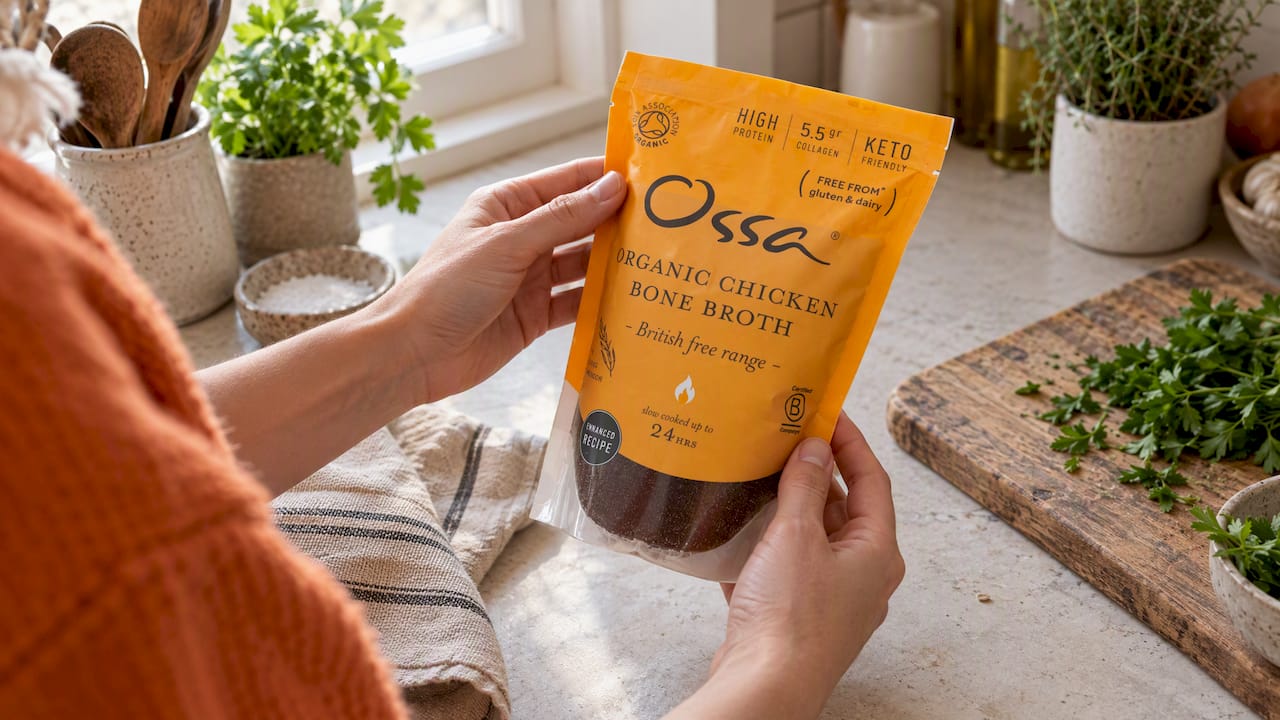
Clean label means the food carries a short, recognisable ingredients list with no additives that sound artificial or hard to pronounce. It is a marketing heuristic, not a legal certification: no regulator in the UK defines or checks the term. That gap matters, because removing synthetic preservatives or colours can change safety, stability or shelf-life in ways a short label never mentions.
TL;DR:
- Shorter, natural substitutes for artificial preservatives often require formulation adjustments, which can lead to shorter shelf-life or more delicate storage conditions.
- Many clean-label claims are marketing heuristics and lack legal definitions, so always verify ingredient lists for true transparency.
- Natural preservatives like rosemary extract or vinegar rarely match synthetics’ stability on a one-to-one basis, potentially impacting food safety and longevity.
- Vague claims such as “natural preservative” or “made with simple ingredients” are unverified and should prompt closer label inspection.
- Genuine organic, minimally processed products, such as slow-cooked bone broths and single-ingredient fats, best exemplify authentic clean-label standards.
Table of Contents
- What people mean by clean label: front-of-pack claims and back-of-pack reality
- Why clean label matters: what drives the trend
- Ingredients shoppers expect to be absent, and what replaces them
- UK rules that clean label claims can’t override
- The clean-label paradox: what removing synthetics can cost
- How to read a label and judge a clean-label claim
- Ossa Organic’s view on clean label as a practice, not a slogan
- Clean-label products worth a closer look
- Sources worth checking for yourself
- FAQ
What people mean by clean label: front-of-pack claims and back-of-pack reality
The phrase splits into two different jobs. Front-of-pack, it is a heuristic: a quick impression built from words like “natural”, “simple” or “no nasties” that a shopper reads in a few seconds. Back-of-pack, it is an inspection task: the actual ingredients list, additive codes and processing aids that determine whether the claim holds up.
Academic reviews of consumer food choice behaviour find there is no single agreed definition of clean label. That is part of the problem: a brand can use the phrase to mean almost anything, from “no artificial colours” to “made in a traditional way”, and the shopper has to work out which one applies.
Common phrasing on packaging includes:
- “No artificial colours, flavours or preservatives”
- “Made with simple, recognisable ingredients”
- “Free from nasties”
- “Nothing you wouldn’t find in your own kitchen”
None of these carry a fixed legal meaning. They describe an intention, not a standard.
Why clean label matters: what drives the trend
Distrust of long, chemical-sounding ingredient names sits at the centre of this. When a label lists an additive by an E-number or an unfamiliar compound name, many shoppers assume it is less healthy, even when the nutrient content is unchanged. Consumer heuristics research on clean label backs this up: people use short ingredient lists as a shortcut to “healthier”, regardless of what the nutrition panel actually says.
Consumer scepticism of long ingredient lists is well documented in food-choice research, and it explains why so many brands have simplified their packaging language in response.
Wider drivers include:
- A cultural preference for foods that feel closer to home cooking than to a factory process
- Growing interest in traceability and where ingredients come from
- Pressure on manufacturers to look transparent even when formulations barely change
The industry response has often been cosmetic: quieter typography, shorter ingredient panels, and softer storytelling about sourcing, alongside genuine reformulation in some cases.
Ingredients shoppers expect to be absent, and what replaces them
Shoppers scanning a clean label typically expect the absence of artificial colours (such as tartrazine or allura red), certain synthetic preservatives (like sodium benzoate or potassium sorbate), and emulsifiers or stabilisers with chemical-sounding names.
Manufacturers commonly substitute these with:
- Plant extracts, such as rosemary or green tea extract, for antioxidant effect
- Cultured dextrose or fermentation-derived ingredients for preservation
- Vinegar or citrus concentrates for acidity and mild antimicrobial action
- Selected natural gums for texture and stability
Pro tip: A natural substitute rarely matches a synthetic additive on a like-for-like basis, so check whether storage instructions or shelf-life have changed alongside the ingredient swap.
Academic review evidence on clean-label alternatives for food preservation confirms this: natural bio-preservatives are an active area of research, but they rarely replace synthetic preservatives one-for-one. Formulation and process changes usually have to accompany the swap.
UK rules that clean label claims can’t override
UK food labelling sits under the Food Information for Consumers Regulation. It sets out mandatory items regardless of how a product markets itself:
- The name of the food
- A full ingredients list, in descending order of weight
- Net quantity
- Date marks
- Declaration of the 14 major allergens, each time they appear in the ingredients
Pre-packed foods must emphasise allergenic ingredients within the list, and precautionary allergen labelling should only follow a proper risk assessment, never stand in for good hygiene practice on the production line.
None of this changes because a product calls itself clean label. A voluntary claim like “no nasties” still has to be truthful and not misleading: it sits on top of the legal baseline, never instead of it.
The clean-label paradox: what removing synthetics can cost
Food safety commentary refers to a “clean-label paradox”: stripping out synthetic preservatives without a genuinely robust natural alternative can leave a product less stable or less safe, not just less artificial.
Natural bio-preservatives remain an active area of research, but most cannot yet replace synthetic preservatives on a one-for-one basis; more trials and development work are ongoing.
Review evidence on clean-label bio-preservatives notes this gap directly, and it is the clearest signal that a shorter ingredients list is not automatically a safer one.
Watch for a few practical red flags:
- A best-before date noticeably shorter than similar products on the shelf
- Storage instructions that suddenly require refrigeration where a comparable product doesn’t
- Vague phrasing like “natural preservative” with no ingredient named
A specific name (fermented whey extract, rosemary extract) tells you something checkable. A vague one tells you nothing.
How to read a label and judge a clean-label claim
Work through the pack in this order:
- Read the full back-of-pack ingredients list, not just the front-of-pack claim.
- Check the allergen declarations and note any processing aids mentioned.
- Look for named preservatives, and treat an unnamed “natural preservative” with caution.
- Compare the storage instructions and best-before date against similar products.
- Favour specific ingredient names over vague marketing language.
Credible proof on pack tends to include:
- Named natural preservatives rather than generic terms
- Recognised certifications rather than self-declared claims
- Clear statements of what has been controlled for, such as specific allergens or additive categories
For more detail on where hidden additives typically show up, common hidden food chemical examples is worth a read, and the practical guide to organic food labels walks through the same checklist in more depth.
Ossa Organic’s view on clean label as a practice, not a slogan
A natural food business was founded after discovering the benefits of bone broth during pregnancy and has spent years building products around organic ingredients and slow cooking rather than short-cut formulation. Ossa Organic holds B Corp certification as a family-run business, and its bone broth, collagen, ghee and tallow lines are built to keep ingredient lists short by design, not by marketing edit.
— Ossa Organic
Clean-label products worth a closer look
Products built on organic, minimally processed ingredients are the practical test of a clean-label claim, not the packaging copy. The Organic Free Range Chicken Bone Broth 500ml and the Organic Chicken Bone Broth Ambient 515ml are made by slow simmering rather than by additive-driven shortcuts. The Organic Chicken Bone Broth 500ml follows the same principle.

For cooking fats, the Organic Tallow - Grass Fed Beef Fat and Organic Ghee - Grass Fed Clarified Butter each carry short, single-ingredient labels. For supplementation, Ossa Certified Grass Fed Collagen Peptides and Ossa Pasture Raised Gelatine and Ossa Pasture Raised Gelatine sit alongside the Ossa X The Food Doula Restore Broth Bundle for readers wanting a fuller gut health set. Browse the full range of bone broths, collagen and grass-fed fats to see how the ingredient lists compare.
Sources worth checking for yourself
- Gov
- Academic review evidence on clean-label alternatives for food preservation summarises where natural bio-preservatives currently stand against synthetic ones
- Independent food-quality commentary from Wild Foodz offers a wider look at food quality standards for shoppers comparing claims across brands.
FAQ
What is considered a clean label?
A clean label generally means a short ingredients list made up of recognisable, familiar-sounding items, with artificial colours, synthetic preservatives and chemical-sounding additives left out. There is no fixed legal definition in the UK, so the exact bar varies from brand to brand.
Is clean label legit as a concept?
It describes a real shift in formulation and marketing, but it functions as a heuristic rather than a checked standard. Scholarly commentary warns it can mislead shoppers if it encourages fear of regulated, safety-tested additives rather than genuine label reading.
What ingredients are avoided in clean-label products?
Common exclusions include artificial colours, certain synthetic preservatives such as sodium benzoate, and emulsifiers or stabilisers with unfamiliar chemical names. Manufacturers typically replace these with plant extracts, fermentation-derived ingredients or natural gums, though these substitutes rarely match synthetics on a one-for-one basis.
Does removing artificial preservatives make food safer?
Not automatically. Removing synthetic preservatives without a proven natural replacement can shorten shelf-life or affect stability, which is why unusually short best-before dates or new refrigeration requirements are worth noticing on a clean-label product.