

Cart
0

TL;DR:
- Broth-based diets rely on nutrient-rich liquid stocks, mainly bone broth, to promote gut health, hydration, and satiety. The effectiveness of these diets stems from amino acids like glycine and proline that support gut lining repair, along with protein-driven fullness. Using broth as part of a balanced, whole-food diet enhances benefits and prevents nutrient deficiencies or energy shortages.
Broth-based diets are defined as eating patterns that use nutrient-rich liquid stocks, most commonly bone broth, as a core dietary component to support gut health, hydration, and controlled calorie intake. The reason why broth based diets work has less to do with any single miracle ingredient and more to do with a combination of low calorie density, bioavailable amino acids, and a measurable effect on satiety hormones. Bone broth, vegetable broth, and meat-based stocks each contribute differently to this picture. Understanding the actual mechanisms behind broth diet effectiveness helps you use these foods purposefully, rather than chasing claims that the science does not fully support.
Why broth based diets work: the gut health mechanism
The most direct answer to why broth supports gut health lies in its amino acid profile. Bone broth contains glycine and proline, two amino acids that support gut lining integrity and contribute to the repair of the intestinal wall. A compromised gut lining is linked to poor nutrient absorption and systemic inflammation. Glycine and proline provide the raw materials the body uses to maintain and rebuild that lining.

Collagen is another compound frequently cited in discussions about broth and gut health. The reality is more nuanced. Collagen breaks down to amino acids during digestion, meaning the collagen in broth does not arrive intact at your gut wall. What you receive instead are the amino acids derived from it, which the body then uses as it sees fit. This does not make broth useless. It means you should view bone broth as a nutrient-dense food rather than a therapeutic supplement with guaranteed targeted effects.
The nutritional value of broth also varies considerably depending on preparation. Beef broth provides approximately 2 calories and zero carbohydrates per 100 grams, making it one of the lowest calorie protein sources available. That low calorie density, combined with its amino acid content, is central to how broth functions within a structured diet.
Here is what the nutrient profile of a standard bone broth actually delivers:
-
Glycine and proline: Support gut lining repair and connective tissue maintenance
-
Glutamine: An amino acid that serves as fuel for intestinal cells, supporting mucosal health
-
Minerals: Present in small amounts; standard broths provide less than 5% of daily calcium, iron, and magnesium requirements
-
Protein: Variable by preparation, but sufficient to trigger satiety responses
-
Hydration: Broth contributes to daily fluid intake, supporting digestion and kidney function
Standard broths provide less than 5% of daily mineral requirements. That figure clarifies broth’s role immediately: it is a hydrating, comforting addition to a diet, not a standalone mineral source.
Pro Tip: Add a handful of leafy greens or a portion of lentils to your broth to increase fibre, iron, and folate content without significantly raising the calorie count.
Does broth actually help with weight management?
Broth does not directly cause weight loss. Anecdotal 21-day plans report losses of up to 15 pounds, but no clinical studies confirm broth as the causal factor. What broth does do is create conditions that make weight management easier within a broader dietary plan.
The mechanism is protein-driven. Protein triggers satiety hormones including cholecystokinin, which signals fullness to the brain and reduces the urge to overeat. Protein is the most satiating macronutrient available, and broth delivers it in a low-calorie, low-fat format. This means you can reduce overall calorie intake without strict counting or feeling deprived.
There are, however, clear limits to what broth can do on its own. Using broth as a sole meal replacement creates real risks:
-
Energy deficiency: Broth lacks the caloric density to sustain normal metabolic function across a full day.
-
Nutrient gaps: Replacing meals solely with broth leads to deficiencies in vitamins, complex carbohydrates, and essential fats.
-
Muscle loss: Without adequate protein from whole food sources, the body may break down muscle tissue for energy.
-
Unsustainable restriction: Extreme broth fasting is difficult to maintain and often leads to rebound eating.
Bone broth is a tool within a structured diet, not a magic weight-loss solution. Its value comes from how it fits within a broader pattern of whole food eating, not from any single compound it contains.
The practical takeaway is straightforward. A broth-based meal plan works best when broth replaces high-calorie, low-nutrient options such as sugary drinks, processed soups, or heavy sauces. It does not work as a replacement for balanced meals.
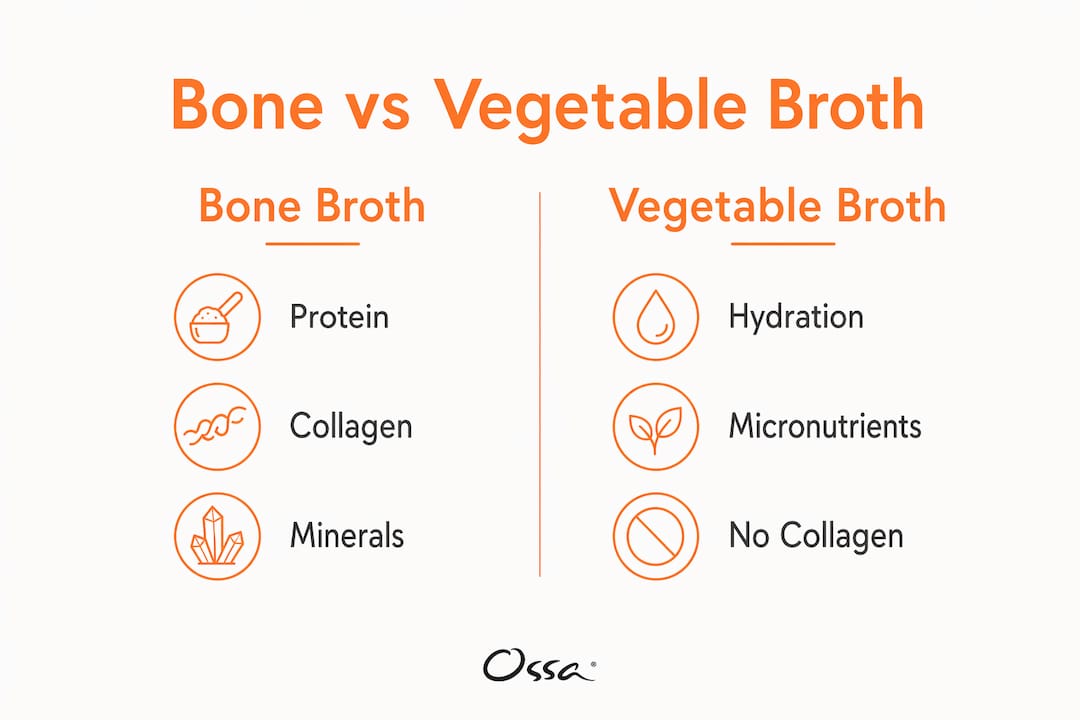
Bone broth vs vegetable broth: which is more nutritious?
Not all broths deliver the same benefits. The type of broth you choose and how you prepare it determines its nutritional impact significantly.
| Broth Type | Protein Content | Collagen/Amino Acids | Mineral Content | Sodium Risk |
|---|---|---|---|---|
| Homemade bone broth | Moderate to high | High (glycine, proline) | Low to moderate | Controllable |
| Commercial bone broth | Moderate | Variable | Low | High |
| Vegetable broth | Very low | None | Low | High in commercial versions |
| Meat broth (no bones) | Moderate | Low | Low | Moderate |
Commercial broths vary widely in quality, and preparation style is the single biggest factor in determining health impact. A homemade bone broth simmered for 12 hours with organic bones will contain more bioavailable amino acids than a shelf-stable commercial product made with flavour enhancers and added salt.
Sodium is the most significant concern with commercial options. One serving can provide around 20% of the recommended daily sodium intake. For anyone managing blood pressure or cardiovascular health, that figure matters. Reading labels carefully and choosing low-sodium products is not optional if you are using broth daily.
Vegetable broth offers hydration and some micronutrients, but it contains no collagen-derived amino acids. It works well as a base for soups and stews, particularly when you add legumes, root vegetables, or wholegrains. Adding legumes and vegetables to any broth increases fibre and micronutrient content substantially, which is the most practical way to close the nutritional gaps that plain broth leaves open.
Pro Tip: When buying commercial bone broth, look for products with fewer than 400mg of sodium per serving and no added flavourings. Ossa Organic’s ambient broths are made without preservatives, giving you control over what goes into your body.
How to build a broth-based meal plan that actually works
Incorporating broth into your diet effectively requires more than drinking a cup each morning. The way you pair broth with other foods determines whether you get lasting benefit or simply add a warm drink to an otherwise unchanged diet.
These are the approaches that produce consistent results:
-
Pair broth with fibre and fat. Adding fibre and fat alongside broth slows digestion and extends the satiety effect. A bowl of bone broth with avocado and roasted vegetables keeps hunger at bay far longer than broth alone.
-
Use broth during intermittent fasting windows. Plain bone broth contains minimal calories and does not significantly disrupt a fasting state. It provides electrolytes and amino acids during the fasting period, reducing the discomfort of hunger without breaking the metabolic benefits of the fast.
-
Replace processed stock cubes with homemade or organic broth. Most stock cubes contain high levels of sodium, hydrogenated fats, and artificial flavourings. Swapping them for a quality bone broth in cooking is a straightforward upgrade.
-
Use broth as a base for nutrient-dense soups. A broth-based soup with lentils, kale, and sweet potato delivers protein, fibre, iron, and complex carbohydrates in a single bowl. This is where broth diet weight loss support becomes genuinely practical.
-
Time your broth intake strategically. Drinking a cup of bone broth 20–30 minutes before a main meal reduces appetite and supports more controlled portion sizes.
One pitfall to avoid is treating a broth cleanse as a long-term strategy. Broth fasting should be time-limited and supervised by a qualified nutrition professional. Short-term cleansing phases of one to three days can give the digestive system a rest, but extending them risks the nutrient deficiencies and energy crashes described earlier. Broth works best as a daily addition to a varied, whole-food diet, not as a periodic extreme measure.
You can find practical guidance on using broth in daily cooking to make the transition from processed foods to whole-food eating more straightforward.
Key takeaways
Broth-based diets work by combining low calorie density, gut-supportive amino acids, and protein-driven satiety within a balanced whole-food eating pattern.
| Point | Details |
|---|---|
| Amino acids drive gut benefits | Glycine and proline in bone broth support gut lining repair and digestive function. |
| Broth aids satiety, not direct weight loss | Protein in broth triggers fullness hormones, reducing overall calorie intake without strict restriction. |
| Preparation determines nutritional value | Homemade or low-sodium broths deliver more benefit than high-sodium commercial alternatives. |
| Broth works within a balanced diet | Replacing meals solely with broth causes nutrient deficiencies; pair it with fibre, fat, and whole foods. |
| Vegetable additions close nutritional gaps | Adding legumes and vegetables to broth significantly increases fibre and micronutrient content. |
What ossa organic has learnt about broth and realistic expectations
After years of building Ossa Organic around bone broth as a daily food, the most common misunderstanding we encounter is that broth is either a superfood cure-all or a fad with no substance. Neither is accurate.
The clinical evidence for broth’s direct effects on skin, joints, and gut lining is still developing. What the evidence does support clearly is that broth provides bioavailable amino acids, supports hydration, and contributes to satiety through its protein content. Those are meaningful, practical benefits. They are also benefits that only materialise when broth is part of a diet that includes diverse whole foods, adequate fibre, and healthy fats.
We started Ossa Organic because bone broth made a genuine difference to our family’s health, particularly around digestion and energy levels. But we have always been clear that broth is one part of a broader commitment to natural, unprocessed food. The families and individuals who see the most benefit from broth are those who use it consistently as part of a paleo or whole-food eating pattern, not those who drink it for a week and expect transformation.
The gut health benefits are real, but they require patience and consistency. If you are new to broth, start by replacing one processed food item per day with a cup of quality bone broth. Track how your digestion, energy, and hunger levels respond over four weeks. That is a more honest and sustainable approach than any short-term cleanse.
— Ossa Organic
Explore ossa organic’s bone broth range
Ossa Organic produces organic bone broths made without preservatives, artificial flavourings, or added fillers. If you are building a broth-based meal plan, starting with a high-quality product removes the guesswork around sodium content and ingredient sourcing. The organic beef bone broth is a rich, slow-cooked option suited to daily use, whether drunk directly or used as a cooking base. The organic chicken bone broth offers a lighter alternative with the same amino acid benefits. For recipe ideas that incorporate broth into balanced, whole-food meals, visit the Ossa Organic recipe collection.
FAQ
What makes bone broth different from regular stock?
Bone broth is simmered for significantly longer than standard stock, typically 12–24 hours, which extracts more collagen-derived amino acids including glycine and proline from the bones. Regular stock is cooked for a shorter period and contains less of these compounds.
Is broth suitable for intermittent fasting?
Plain bone broth is low in calories and does not significantly disrupt a fasting state, making it a practical option during fasting windows. It provides electrolytes and amino acids that reduce hunger without triggering a full insulin response.
How much sodium is in commercial bone broth?
One serving of commercial bone broth can provide around 20% of the recommended daily sodium intake. Choosing low-sodium or homemade versions is advisable for anyone using broth daily or managing cardiovascular health.
Can broth alone cause weight loss?
Broth does not directly cause weight loss. It supports weight management by increasing satiety through protein content and reducing overall calorie intake, but it must be part of a balanced diet to produce lasting results.
Does the collagen in bone broth reach the gut intact?
Collagen in bone broth is broken down into amino acids during digestion and does not arrive at the gut wall intact. The amino acids derived from it, particularly glycine and proline, are what provide the gut-supportive benefits attributed to collagen-rich broths.