

Cart
0

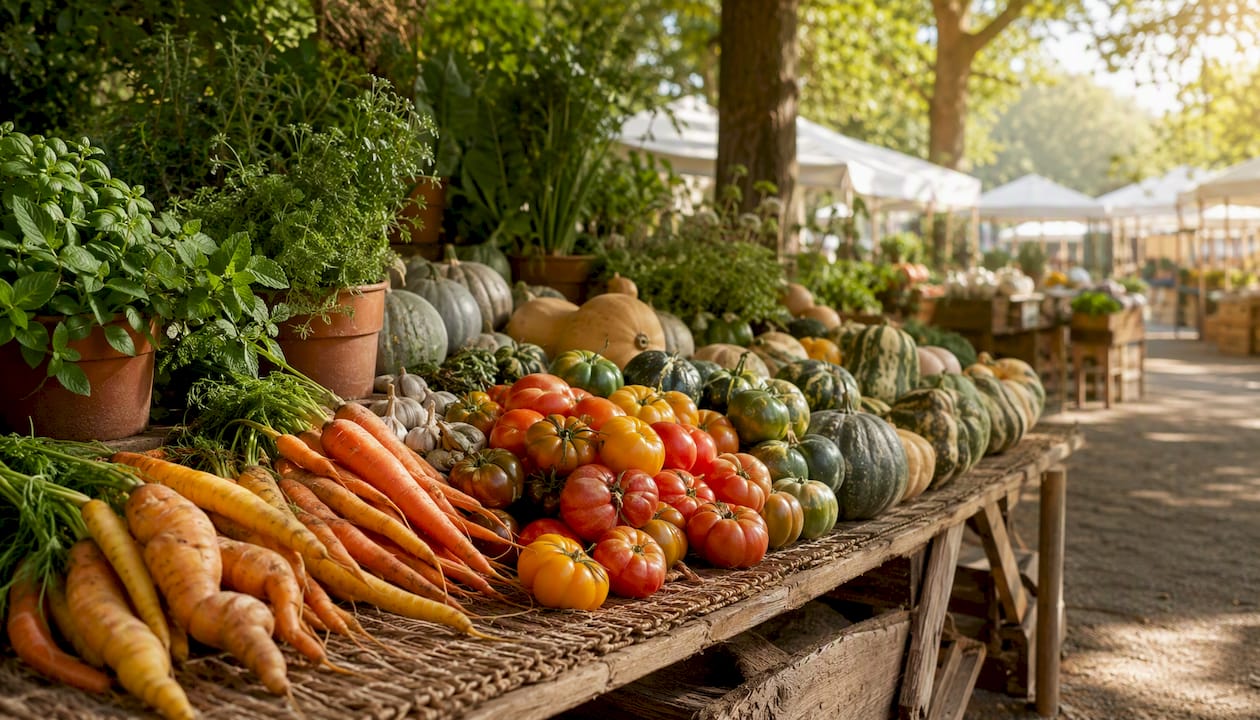
Farmers market food differs from supermarket produce because of four specific factors: harvest timing, variety selection, growing methods, and a shorter post-harvest chain. Market growers typically pick closer to peak ripeness, choose flavour-led varieties rather than shelf-stable cultivars, and sell within days of harvest rather than weeks.
Key mechanisms at a glance:
-
Picked riper. Produce reaches the stall at or near peak sugar and aroma development.
-
Heirloom and heritage varieties. Chosen for taste and local adaptation, not uniform size or transport resilience.
-
Minimal cold chain. Farm to stall in hours or days, not weeks through a packhouse.
-
No cosmetic sorting. Odd shapes and blemishes stay in; flavour is the selection criterion.
-
Lower chemical inputs. Many small farms use practices consistent with organic standards, even without certification.
-
Seasonal alignment. Produce is sold at its natural peak, not forced or stored to extend availability.
At UK farmers markets, expect irregular shapes, vivid colour variation, and flavour intensity that supermarket equivalents rarely match.
Table of Contents
-
How does the supply chain change what arrives on your plate?
-
Why does market produce look so different from supermarket produce?
-
How quickly do nutrients and flavour compounds decline after harvest?
-
How do you shop well at a farmers market and avoid common mistakes?
-
What does research tell us about markets, diet and community?
-
Ossa Organic bone broths: a pantry complement to market shopping
Why does harvest timing change how produce tastes?
Produce picked closer to ripeness contains more sugars, organic acids, and volatile aroma compounds. Those volatiles are what you actually smell and taste. Supermarket tomatoes are typically harvested green or “mature-green” to survive long transport, then ripened artificially with ethylene gas. A vine-ripened tomato from a market stall has had more time to convert starches to sugars and build its aromatic profile on the plant.
Strawberries make the contrast even clearer. The varieties grown for supermarket supply chains prioritise firmness and shelf life. A heritage strawberry variety sold at a farmers market two days after picking will be softer, more fragrant, and noticeably sweeter. Sweetcorn is the most time-sensitive example: its sugars begin converting to starch within hours of harvest. Buying it at a market on the day of picking is a genuinely different product from a supermarket cob that has been in transit for several days.
-
Vine-ripened tomatoes: higher lycopene and sugar content at point of sale.
-
Strawberries: aroma volatiles peak at full ripeness, then decline rapidly.
-
Sweetcorn: sugar-to-starch conversion begins within hours of picking.
Pro Tip: Ask the vendor when the produce was harvested. Most market growers will tell you the exact day, and that single piece of information tells you more about flavour than any label.
How does the supply chain change what arrives on your plate?
The post-harvest journey is where much of the difference between local food and store-bought produce is created. A typical supermarket supply chain runs: harvest → packhouse grading → refrigerated transport → regional distribution centre → store shelf. That process can take one to three weeks for produce sourced from continental Europe or further afield.
A farmers market chain is: harvest → van → stall. Often within 24–48 hours.
Supermarket chain: Farm → Packhouse → Cold storage → Distribution centre → Supermarket shelf
Farmers market chain: Farm → Market stall (often same day or next day)
Supermarkets use several interventions to manage that extended chain. Controlled-atmosphere storage (reduced oxygen, elevated CO₂) slows ripening in apples and pears. Ethylene gas triggers ripening in tomatoes and bananas after transport. Wax coatings on cucumbers and citrus reduce moisture loss. Each intervention extends shelf life but alters texture, aroma, and sometimes flavour.
-
Controlled-atmosphere storage: slows ripening but can suppress volatile aroma development.
-
Ethylene gassing: triggers colour change but does not replicate the full biochemical ripening that happens on the plant.
-
Wax coatings: reduce moisture loss but change mouthfeel and require washing before eating.
Post-harvest handling differences are a primary reason, as ScienceDirect’s overview of farmers market research confirms, that market produce has shorter shelf life but more pronounced flavour at point of purchase.
Why does market produce look so different from supermarket produce?
Supermarkets enforce strict cosmetic grading standards. Size, shape, colour uniformity, and surface blemish thresholds are set by retailer specifications, and produce that falls outside those parameters is rejected at the packhouse. The result is a shelf that looks consistent but represents only a fraction of what a farm actually grows.
| Cosmetic grading driver | Supermarket priority | Farmers market priority |
|---|---|---|
| Size uniformity | Required for packaging and display | Not required |
| Surface blemishes | Rejected above threshold | Accepted if flavour-neutral |
| Shape regularity | Standardised | Varies by variety |
| Shelf life at point of sale | 7–14 days | 2–5 days |
| Variety diversity | Limited to commercial cultivars | Wide, including heirlooms |
At a market, the farmer sells what grows. A misshapen carrot or a scarred apple is not a quality signal; it is a cosmetic one. The flavour inside is unaffected by surface irregularity.
Pro Tip: A blemish that is superficial and dry is cosmetic only. A soft, wet, or mouldy patch affects the flesh beneath. Press gently and smell; those two checks tell you what a label cannot.
How quickly do nutrients and flavour compounds decline after harvest?
Many phytonutrients and volatile flavour compounds decline measurably after harvest. Vitamin C is among the most sensitive, degrading with exposure to heat, light, and time. Folate levels in leafy vegetables drop within days at ambient temperature. Flavour volatiles in tomatoes and strawberries peak at ripeness and then fall.
The rate of decline depends on storage conditions, variety, and crop type. Robust root vegetables like carrots and parsnips retain nutrients well under cool storage. Leafy greens and soft fruits are far more time-sensitive. The practical implication: the shorter the time between harvest and your kitchen, the more of those compounds remain.
A Washington, DC study published in MDPI found that increased farmers market usage correlates with higher fruit and vegetable consumption, suggesting that access to fresh, appealing produce changes eating behaviour, though the researchers note that causality is complex and local context matters. The benefits of seasonal produce align with this finding: buying at peak season means buying at peak nutrient density.
-
Use leafy greens and soft fruit within one to two days of purchase.
-
Store root vegetables in a cool, dark place to slow nutrient loss.
-
Preserving organic seasonal produce at home extends the value of a market shop between visits.
What food safety rules apply at UK farmers markets?
UK food safety law applies to all market traders. The Food Standards Agency (FSA) and local authority environmental health teams regulate hygiene standards for food businesses, including market stalls, under the same framework as other food sellers. Direct sale is not inherently less safe than supermarket retail; risk depends on handling practices.
Practical checklist for buyers:
-
Ask whether chilled products (meat, dairy, fish) have been kept at the correct temperature throughout the day.
-
Check whether the trader is registered with their local authority as a food business.
-
Ask about on-farm hygiene practices for raw produce.
-
For organic claims, ask whether the farm is Soil Association certified or operating under another recognised scheme.
-
Defra and the FSA publish guidance for both market traders and consumers; checking those resources before your first visit is straightforward.
Short shelf life at point of sale is a feature of fresh market produce, not a safety concern. The key distinction is between produce that is fresh and perishable versus produce that has been mishandled.
How do you shop well at a farmers market and avoid common mistakes?
A few repeatable habits substantially improve market purchases.
-
Arrive early. The best seasonal produce sells out. Early arrival also means vendors are less rushed and more willing to talk.
-
Bring bags and cash. Many smaller stalls do not accept cards, and reusable bags avoid the need for single-use packaging.
-
Taste before you buy. Most vendors offer samples. Use them.
-
Ask the harvest date. “When was this picked?” is the single most useful question at any stall.
-
Avoid buying refrigerated items first. Meat, fish, and dairy should go into a cool bag immediately; pick them up last.
-
Do not overbuy perishables. Market produce has a shorter shelf life than supermarket equivalents. Buy what you will use within two to three days.
-
Walk the whole market before buying. Compare stalls, prices, and variety before committing.
-
Build vendor relationships. Regular customers often get advance notice of seasonal arrivals, occasional extras, and honest advice about what is worth buying that week.
Sample questions to ask a vendor:
-
“When was this harvested?”
-
“What variety is this, and why did you choose it?”
-
“Do you spray, and if so, what with?”
-
“How should I store this at home?”
The practical guide to sourcing organic ingredients locally covers additional steps for building a reliable local food routine.
What does research tell us about markets, diet and community?
Research shows that farmers market usage correlates with higher fruit and vegetable consumption and measurable local economic benefits, though the relationship is not straightforwardly causal. The MDPI study from Washington, DC found that market shoppers reported increased fruit and vegetable intake, with vendor-customer knowledge transfer playing a role in that change. The Farmers Market Coalition’s evidence base confirms that most vendors actively discuss farming practices and nutrition with customers, which raises consumer knowledge in ways that passive supermarket labelling does not.
Post-harvest logistics research, including work indexed on ScienceDirect, identifies the length and complexity of the supermarket supply chain as a primary driver of flavour and texture differences between local and retail produce.
Key interpretation points for UK shoppers:
-
Higher market usage tends to support better dietary patterns, but the effect is strongest when shoppers engage with vendors and understand seasonality.
-
Local does not automatically mean lower environmental impact. Academic literature on locavorism notes that transport distance is only one variable; production methods, land use, and food waste also matter.
-
Community and economic benefits of markets (keeping money in local food systems, supporting small farms) are real but separate from the nutritional argument.
-
The role of organic foods in sustainable living provides further context on how sourcing choices connect to broader environmental outcomes.
Key takeaways
Farmers market food differs primarily because of harvest timing, variety selection, shorter post-harvest chains, and the absence of cosmetic grading — factors that together favour flavour and nutrient retention over shelf life and uniformity.
| Point | Details |
|---|---|
| Harvest timing is decisive | Produce picked closer to ripeness has more sugars, aroma compounds, and phytonutrients at point of sale. |
| Variety choice shapes flavour | Heirloom and heritage cultivars are bred for taste and local adaptation, not transport resilience or shelf life. |
| Shorter supply chain, less intervention | Farm to stall in hours rather than weeks means no ethylene gassing, wax coatings, or controlled-atmosphere storage. |
| Cosmetic grading excludes flavour-neutral produce | Blemishes and irregular shapes are cosmetic, not quality indicators; markets sell what grows. |
| Ossa Organic complements market shopping | Shelf-stable organic bone broths from Ossa Organic provide concentrated nutrients between market visits, with no preservatives or artificial ingredients. |
Why this difference matters beyond the market stall
The case for farmers market food is often framed around taste, and taste is real. But the more significant point is what harvest timing and variety selection reveal about how the food system prioritises different things. Supermarket supply chains are optimised for shelf life, cosmetic consistency, and year-round availability. Those are genuine consumer benefits. The cost is that flavour, variety diversity, and the knowledge of where food comes from are systematically deprioritised.
The “local is always better” claim deserves scrutiny. Academic literature on locavorism is clear that transport distance is only one variable in environmental impact. A poorly managed local farm can have a larger footprint than an efficient distant one. The honest position is that market shopping is better for flavour and seasonal variety, often better for nutrient retention, and better for direct producer relationships. It is not automatically better for every environmental metric.
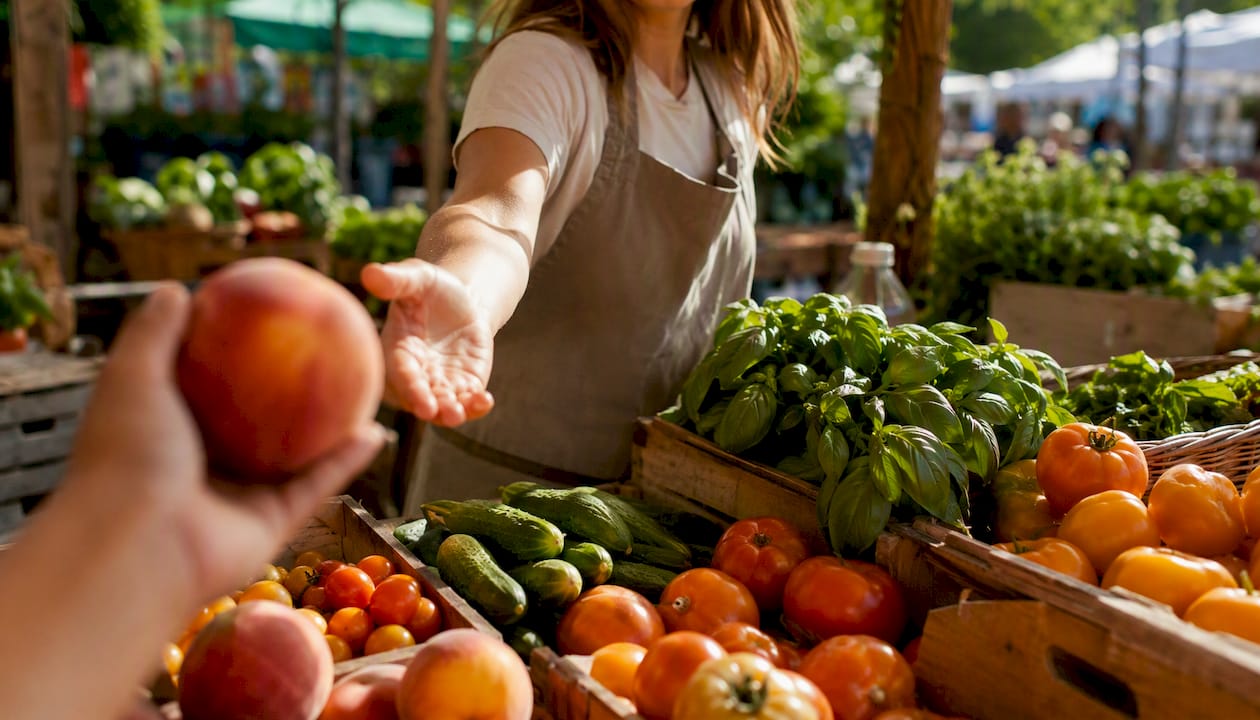
What markets do well, and what supermarkets structurally cannot replicate, is the vendor-customer conversation. Knowing the variety, the harvest date, the spray regime, and the farm’s soil management is information that changes how you cook and what you buy. That knowledge transfer is the underrated benefit of market shopping, and it is one that fresh food and health research consistently identifies as a driver of better dietary choices.
Ossa Organic bone broths: a pantry complement to market shopping
For shoppers who value nutrient density and want convenience between market visits, shelf-stable bone broths fill a practical gap. Markets are seasonal and weekly; a well-stocked pantry is not. Ossa Organic’s range is made from organic, grass-fed and free-range animals with no preservatives or artificial ingredients, slow-cooked to retain collagen and minerals.
Three products worth keeping alongside your market haul:
-
Organic Beef Bone Broth Ambient 515ml — shelf-stable, ready to use as a cooking base or warm drink.
-
Organic Free Range Chicken Bone Broth 500ml — made from free-range chicken, suitable for soups, grains, and sauces.
-
Organic Chicken Bone Broth Ambient 515ml — ambient format for easy storage between shops.
Ossa Organic is a B Corp certified, family-run business. Browse the full range and explore recipes at ossaorganic.com, or start with the 14-day gut reset programme if you want a structured approach to incorporating both market produce and nutrient-dense pantry staples.
Useful sources
-
Farmers markets vs. supermarkets: Cost differences, health benefits
-
Farmers’ Market Usage, Fruit and Vegetable Consumption, Meals at Home and Health – Evidence from Washington, DC (MDPI)
-
The benefits of farmers markets | Farmers Market Coalition
-
Top reasons to shop farmers market | USDA blog
-
Farmer’s Market overview | ScienceDirect Topics
-
Academic discussion on locavorism and environmental claims (Wiley Online Library)
-
Why shop at farmers markets? 6 real benefits | FarmersMarkets.io
-
8 common mistakes to avoid when visiting your local farmers market | Martha Stewart
FAQ
Are farmers markets better quality than supermarkets?
For flavour and freshness, market produce is often superior because it is harvested closer to peak ripeness and sold within days. Quality varies by vendor, so asking about harvest dates and growing practices is the most reliable way to assess individual stalls.
Are farmers markets cheaper than supermarkets in the UK?
For in-season staples at peak harvest, prices are often comparable. Certified organic or labour-intensive items typically cost more. The price gap between markets and supermarkets has narrowed, and dietitians note that freshness can justify modest additional cost when nutrient retention is the measure of value.
What are the common mistakes at farmers markets?
Buying refrigerated items early in the visit, overbuying perishables, and not asking about harvest dates are the most common errors. Walking the whole market before purchasing and bringing a cool bag for chilled products avoids most of them.
What are the downsides of farmers markets?
Limited opening hours, shorter shelf life on produce, and higher prices on some items are the main drawbacks. Availability is seasonal, so year-round staples may need supplementing from other sources. Shelf-stable options like Ossa Organic bone broths help fill those gaps between visits.