
Cart
0
TL;DR:
- Organic gelatin is made from pasture-raised animals without synthetic hormones or GMO feed, resulting in a cleaner amino acid profile. It contains higher levels of key collagen-building amino acids like glycine, proline, and hydroxyproline, promoting health benefits such as joint support and gut repair. Its production involves gentle enzymatic hydrolysis, preserves collagen integrity, and offers better flavor, safety, and traceability compared to conventional gelatin.
Organic gelatin is a protein derived from the collagen of pasture-raised, organically farmed animals, and it stands apart from conventional gelatin through its cleaner composition and stricter production standards. Understanding why organic gelatin differs matters because the source animal’s diet, living conditions, and the processing method all shape the final product’s amino acid purity, flavour, and health potential. Conventional gelatin is extracted from animals raised in industrial conditions, often exposed to synthetic hormones, antibiotics, and GMO feed. That upstream difference carries through to every gram of gelatin you consume. Ossa Organic was built on exactly this principle: that the quality of what goes in determines the quality of what comes out.
Why organic gelatin differs in amino acid profile
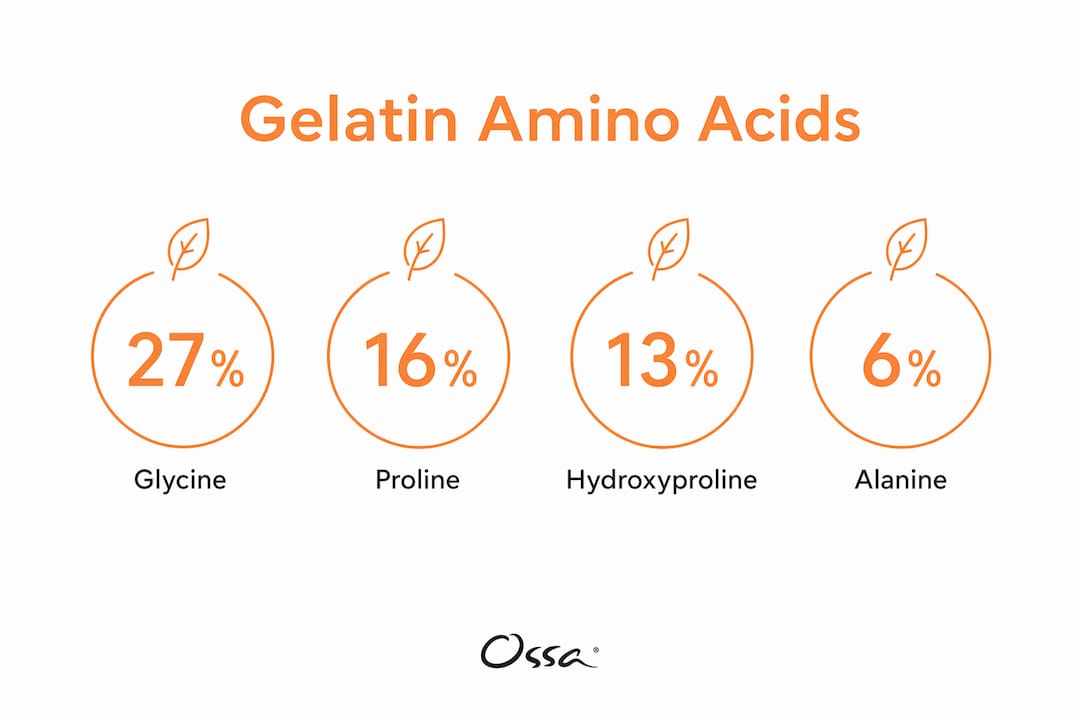
The amino acid composition of gelatin is the single most important measure of its nutritional quality. Organic gelatin sourced from pasture-raised animals contains notably higher glycine at approximately 27% of total amino acid content, alongside proline at around 16% and hydroxyproline at around 14%. These three amino acids are the primary building blocks of collagen in the human body. A cleaner source animal produces a cleaner amino acid profile, with fewer trace contaminants interfering with absorption.
Glycine does more than support collagen synthesis. It plays a direct role in gut lining repair, liver detoxification, and sleep quality regulation. Proline and hydroxyproline are essential for collagen formation, the structural protein that holds joints, skin, and connective tissue together. Conventional gelatin contains these amino acids too, but at lower concentrations and alongside residues from synthetic inputs used in industrial animal farming.
The purity gap between organic and conventional gelatin is not trivial. Grass-fed and pasture-raised collagen removes trace contaminants often present in mass-market gelatin, including residual pesticides and heavy metals that accumulate in animal bone and hide. This matters most for people consuming gelatin daily as a supplement rather than occasionally as a cooking ingredient.
Gelatin is not a complete protein. It lacks certain essential amino acids, including tryptophan, so it cannot replace a balanced diet. Its value lies in the specific amino acids it delivers in high concentrations, particularly glycine, which is difficult to obtain in meaningful quantities from most whole foods alone.
Pro Tip: Pair your organic gelatin with a source of Vitamin C, such as a small glass of orange juice or a handful of berries. Vitamin C is required for the hydroxylation of proline into hydroxyproline, a step that is essential for stable collagen formation.
| Amino acid | Approximate content in organic gelatin | Primary function |
|---|---|---|
| Glycine | ~27% | Collagen synthesis, gut repair, sleep support |
| Proline | ~16% | Collagen structure, skin elasticity |
| Hydroxyproline | ~14% | Connective tissue stability, joint support |
| Alanine | ~9% | Energy metabolism, immune support |
How is organic gelatin made differently?
The difference between organic and conventional gelatin begins long before any processing takes place. Certified organic animal rearing excludes synthetic hormones, antibiotics, and GMO feeds entirely. The bones and hides used to produce organic gelatin come from animals whose entire lives met strict welfare and dietary standards. That upstream integrity is what the organic certification actually guarantees.

Processing method is the second major differentiator. Conventional gelatin production uses high heat and acidic or alkaline chemical baths to extract collagen from raw materials. These industrial methods are efficient and cheap, but they degrade delicate collagen peptides and can introduce off-flavours. Enzymatic hydrolysis at controlled low temperatures preserves collagen peptide integrity better than high-heat industrial methods, producing cleaner flavour and better solubility in liquids.
The practical differences in production between organic and conventional gelatin include:
-
No synthetic inputs upstream. Organic-certified animals receive no antibiotics, growth hormones, or GMO feed at any stage of rearing.
-
Lower processing temperatures. Controlled enzymatic hydrolysis avoids the peptide damage caused by industrial acid and heat extraction.
-
Cleaner flavour profile. The absence of chemical processing agents means organic gelatin dissolves with a neutral taste, making it more versatile in both sweet and savoury recipes.
-
Full traceability. Certified organic supply chains require documentation at every stage, from farm to finished product. This reduces contamination risk and supports consumer confidence.
-
Absence of heavy metal residues. Industrial gelatin sourced from animals fed synthetic inputs can carry trace heavy metals. Organic certification and pasture-raised sourcing reduce this risk significantly.
Traceability is a point that rarely gets enough attention. Knowing exactly where your gelatin comes from is not just an ethical consideration. It is a quality assurance mechanism. When the supply chain is documented and certified, the risk of adulteration or contamination drops considerably. This is one reason why Ossa Organic prioritises sourcing transparency as a core part of its product standards.
The label terms “bovine”, “porcine”, and “marine” describe the animal source of gelatin and address technical or religious considerations. “Organic” certification specifically addresses animal welfare and the absence of synthetic inputs. These are separate quality dimensions, and a product can be bovine without being organic, or organic without being grass-fed. Reading labels carefully matters.
In what ways does organic gelatin differ in culinary uses and texture?
Organic gelatin delivers a texture that plant-based alternatives cannot replicate. Animal-derived gelatin produces a characteristic “bouncy”, melt-in-the-mouth set that softens at body temperature. This is the quality that makes a properly made panna cotta or a classic aspic feel luxurious rather than rubbery. Plant-based gels behave differently at a molecular level, and the difference is immediately noticeable on the palate.
The table below compares organic gelatin with the two most common plant-based alternatives across the properties that matter most in cooking.
| Property | Organic gelatin | Agar | Pectin |
|---|---|---|---|
| Texture | Soft, bouncy, melts at body temperature | Firm, brittle, does not melt in the mouth | Soft to firm depending on sugar and acid levels |
| Setting temperature | Sets when chilled, melts when warm | Sets at room temperature, heat-stable | Sets when cooled with sufficient sugar |
| Protein content | High (collagen-derived amino acids) | None | None |
| Culinary uses | Jellies, mousses, gummies, bone broth, aspic | Vegan jellies, Asian desserts, microbiological media | Jams, marmalades, fruit glazes |
| Flavour impact | Neutral to mild when organic | Neutral | Slightly tart depending on fruit source |
The protein content of organic gelatin is a genuine functional advantage in cooking. It contributes body and mouthfeel to broths and sauces in a way that no plant-based thickener can match. A well-made bone broth sets to a firm jelly when chilled precisely because of its gelatin content. That gel strength is a reliable indicator of collagen quality and concentration.
For home cooks, the practical advice is straightforward. Use organic gelatin at a ratio of approximately 1 teaspoon per 250ml of liquid for a soft set, and 2 teaspoons for a firmer result. Always bloom the gelatin in cold water first, then dissolve it in warm liquid. Avoid boiling gelatin after it has dissolved, as sustained high heat weakens the gel structure. You can find a range of gelatin recipe ideas that put these principles into practice across sweet and savoury applications.
Organic gelatin also performs better in slow-cooked preparations. Because it has not been degraded by industrial processing, it retains stronger gelling capacity per gram. This means you often need slightly less organic gelatin than a conventional product to achieve the same set, which offsets some of the price difference.
What are the practical health benefits and recommended uses?
The health case for organic gelatin is grounded in clinical evidence, not marketing claims. A meta-analysis of 35 randomised controlled trials involving 870 participants found a mean joint pain reduction of 13.63 points on standard pain scales when participants consumed 10g of gelatin daily for 4–12 weeks. The effect was most consistent in adults aged 40 and over. That is a meaningful result from a low-risk, food-derived supplement.
The recommended approach to using organic gelatin for health benefits follows a clear sequence:
-
Start with a consistent daily dose. 10g per day is the dose supported by clinical evidence for joint and connective tissue benefits. This is roughly one heaped tablespoon of powdered gelatin.
-
Time your intake around movement. Consuming 10g of gelatin with Vitamin C approximately 60 minutes before physical activity optimises collagen synthesis in connective tissue. This timing takes advantage of the increased blood flow to tendons and ligaments during exercise.
-
Add it to food rather than taking it as a capsule. Gelatin dissolves readily in warm liquids, making it easy to add to soups, broths, smoothies, or hot drinks without altering flavour significantly.
-
Allow at least four weeks before assessing results. Collagen synthesis is a slow biological process. Expecting visible or felt results in under a month is unrealistic. The clinical trials that showed benefit ran for 4–12 weeks.
-
Support absorption with co-factors. Vitamin C is the most important co-factor for collagen synthesis. Zinc and copper also play supporting roles. A diet that includes fresh vegetables and whole foods alongside gelatin supplementation produces better outcomes than gelatin alone.
Gelatin also supports gut lining integrity through its glycine content. Glycine helps regulate gastric acid secretion and supports the repair of the intestinal epithelium. The gut health benefits of organic bone broth are closely linked to its gelatin content, which is why bone broth has been used as a restorative food across many cultures for centuries.
Pro Tip: If you find powdered gelatin difficult to incorporate into your routine, organic bone broth is a ready-made source of gelatin that also delivers minerals and other collagen co-factors in a single serving. It requires no preparation beyond warming.
One common misconception is that gelatin and collagen peptides are interchangeable. They share the same amino acid profiles but differ in processing and culinary behaviour. Gelatin forms gels when cooled. Collagen peptides dissolve in cold liquid and do not gel. The choice between them depends on intended use, not nutritional superiority. For cooking and gut support, gelatin is the more functional option. For cold drinks and convenience, collagen peptides are easier to use.
Key takeaways
Organic gelatin differs from conventional gelatin primarily because of its certified organic sourcing, which produces a cleaner amino acid profile, fewer contaminants, and better culinary performance than industrially produced alternatives.
| Point | Details |
|---|---|
| Sourcing determines quality | Certified organic, pasture-raised animals produce gelatin with higher glycine purity and fewer contaminants. |
| Processing preserves integrity | Low-temperature enzymatic hydrolysis protects collagen peptides better than industrial acid and heat methods. |
| Texture is unique | Organic gelatin delivers a melt-in-the-mouth set that agar and pectin cannot replicate. |
| Clinical evidence supports daily use | 10g daily for 4–12 weeks shows meaningful joint pain reduction in adults aged 40 and over. |
| Timing and co-factors matter | Taking gelatin with Vitamin C 60 minutes before exercise maximises collagen synthesis in connective tissue. |
Ossa Organic’s view on choosing gelatin wisely
Sourcing transparency is the issue that most gelatin buyers overlook, and it is the one that matters most. When Ossa Organic was founded, the founding principle was simple: the quality of the raw material determines the quality of the outcome. That applies to bone broth, and it applies equally to gelatin. Choosing a product because it is labelled “collagen” or “protein” without knowing where the animal came from is like buying olive oil without knowing the country of origin. The label tells you the category. It does not tell you the quality.
The price difference between organic and conventional gelatin is real. Organic certification, pasture-raised animal welfare standards, and lower-temperature processing all add cost. The question worth asking is not whether organic gelatin is expensive, but whether the alternative is actually cheaper when you account for lower amino acid purity and higher contamination risk. Consuming more of a lower-quality product to achieve the same effect is not a saving.
For people new to gelatin supplementation, the most common mistake is inconsistency. Four days of use followed by a two-week gap produces no measurable benefit. The clinical evidence is built on daily, consistent consumption over weeks. Treat it as a food habit, not a remedy. Add it to your morning broth, your evening soup, or your weekend cooking. The grass-fed gelatin Ossa Organic produces is designed to fit into daily food routines without requiring a separate supplement protocol.
Taste and texture quality are also worth noting from direct experience. Organic gelatin from well-sourced animals dissolves cleanly, with no off-flavour or chemical aftertaste. Conventional gelatin can carry a faint odour or taste that becomes noticeable in delicate recipes. In a panna cotta or a clear aspic, that difference is immediately apparent. In a hearty broth, it is less obvious. But if you are cooking with gelatin regularly, the cleaner flavour of an organic product makes a practical difference to the food you serve.
— Ossa Organic
Ossa Organic’s organic gelatin and bone broth range
Ossa Organic sources its collagen products from certified organic, pasture-raised animals, applying the same standards described throughout this article. The Organic Beef Bone Broth is a ready-to-use source of natural gelatin, glycine, and collagen-supporting minerals in a single 515ml serving. For those who prefer poultry, the Organic Chicken Bone Broth delivers the same sourcing standards in a lighter flavour profile. Both products are shelf-stable, require no preparation beyond warming, and fit directly into the daily intake routines supported by clinical evidence. They are made without preservatives, additives, or synthetic inputs, consistent with Ossa Organic’s founding commitment to natural food and natural living.
FAQ
What is the main difference between organic and conventional gelatin?
Organic gelatin comes from pasture-raised animals reared without antibiotics, synthetic hormones, or GMO feed, producing a cleaner amino acid profile and fewer contaminants than conventional gelatin sourced from industrially farmed animals.
Is organic gelatin healthier than regular gelatin?
Organic gelatin contains higher glycine purity and lower contamination risk than mass-market gelatin. Clinical evidence supports 10g daily for joint and gut health benefits, with organic sourcing reducing the risk of residual synthetic inputs in each dose.
How much organic gelatin should I take each day?
A daily dose of 10g is the amount supported by clinical trials showing joint pain reduction over 4–12 weeks. Consuming it with Vitamin C approximately 60 minutes before physical activity further supports collagen synthesis.
Can organic gelatin replace plant-based gelling agents in cooking?
Organic gelatin cannot be substituted directly for agar or pectin in all recipes because they set differently and at different temperatures. Gelatin produces a soft, melt-in-the-mouth texture that plant-based gels do not replicate, making it the preferred choice for mousses, jellies, and bone broth preparations.
What does “grass-fed” mean on a gelatin label compared to “organic”?
“Grass-fed” describes the animal’s diet, while “organic” certification covers diet, welfare, and the absence of synthetic inputs across the animal’s entire life. A product can carry both labels, and the combination offers the strongest assurance of amino acid purity and minimal contamination risk.